How to Bring Your Pet to Chile: A Complete Guide (From Our Chaos to Your Calm)
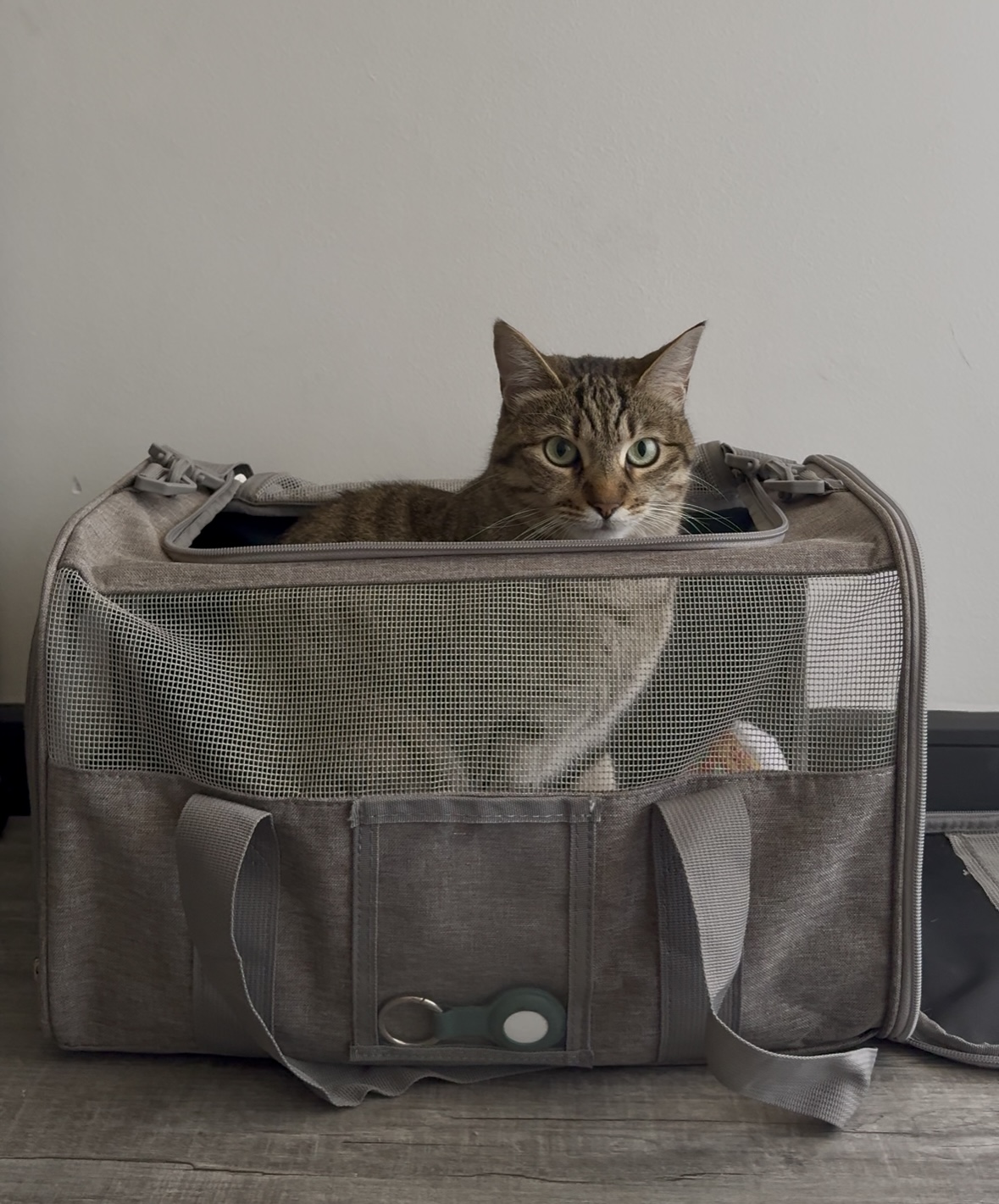
So you’ve decided to move to Chile and bring your furbaby. We get it. When we committed to moving, the very first question wasn’t “Where will we live?” or “How do we open a bank account?” It was: How do we bring our cat, Michelada, with us?
We wish we could tell you it was easy or fun. It wasn’t. But she made it safely to Santiago, and in the end… that’s all that matters.
Here’s everything we learned (the hard way) so your pet’s journey to Chile can be way less stressful.
1. Start with SAG (Chile’s Version of the USDA)
Before you schedule a single vet appointment, you should start by checking the official requirements from SAG (Servicio Agrícola y Ganadero), which is Chile’s equivalent to the U.S. Department of Agriculture.
⭐️ Their requirements can change, and sometimes without much warning. So always always double-check the SAG website for the most up-to-date information.
2. The Paperwork You Need for Your Pet
When we brought Michelada, we needed the following (and this is generally standard for pets entering Chile):
✔ Up-to-Date Vaccines
This includes rabies and any core vaccines your vet recommends.
📄 An International Health Certificate (and here’s where it gets stressful)
This document must be:
Issued by a USDA approved vet (not all vets have the credentials to this paperwork)
Submitted to the USDA and approved within 10 days of travel
USDA took about 3 days to approve ours, and they only work Monday–Friday, so plan your timeline very carefully.
💸 How much it cost us
Health certificate: $200+
Vet visit + vaccines: ~$300
Total: almost $500 before we even touched the airline fees.
Yep. Deep breath.
3. Booking the Flight (This Part Is a Whole Strategy)
We learned very quickly that you can’t just book any flight from the U.S. to Chile and assume your pet will be accepted.
Here’s what matters:
❌ Do NOT connect through another country
Even if you’re just passing through the airport, many countries require additional documentation, fees, or quarantine rules. Avoid this at all costs. Stick with layovers inside the United States only.
❌ Avoid mixing airlines
Even partner airlines can charge you separate pet fees, which can double or triple your cost. We literally had to cancel and rebook two flights because of this.
✔ Always fly with ONE airline
Same ticket. Same booking. Same airline start to finish.
✔ What airline we used
We flew United from San Francisco (SFO) → Atlanta (ATL) → Santiago (SCL).
Pet fee: $175
Smooth process, friendly staff, and no issues.
4. What We Used for the Flight (Highly Recommend These)
These were lifesavers:
Airline-approved soft-sided carrier
The kind that fits under the seat but still has room for the pet to turn around.
We spoke with our vet and got a gabapentin prescription to help calm her for the long journey. (Always talk to your vet; never medicate pets without guidance.)
We gave her:
Dose #1 before leaving San Francisco
Dose #2 during our layover in Atlanta (mixed with Churu, works every time)
Shockingly, our extremely talkative cat didn’t make a sound the entire flight. Whether it was the meds, the pheromones, or pure existential panic is unclear… but hey, it worked.
She only ever meowed twice:
To tell us she had to use the restroom
During the descent into Santiago
The funniest part? None of the cabin crew even realized we had a cat on board. At baggage claim a flight attendant walked by and said:
“Ohhh, that’s the kitty we had on the flight!”
Honestly… success.
6. Arriving in Chile With Your Pet (WAY Less Scary Than Expected)
After the long haul, we finally reached immigration (PDI) with the documents in hand, and hearts pounding.
We said (in Spanish, rough translation to):
“Hi, we have a cat. Here is all the paperwork.”
And the officer basically said (not verbally, but in energy):
“I don’t care. Next.”
He just stamped our passports and waved us toward the SAG area.
We were confused. We were ready for interrogation. Instead… SAG told us:
“Take her out of the carrier and put the carrier through the x-ray machine.”
We did.
They looked at her.
They said: “Ok, chao.”
And that was it.
No paperwork checked. No questions. Nothing. It was WILD. We prepared a binder like we were defending our master’s theses again. This might not be everyone’s experience, but it was shockingly easy.
7. Welcome to Chile! Pet Supplies & What to Expect
Once you make it out of the airport, the first thing you’ll want to do is get your pet settled. We stayed in a pet-friendly Airbnb and then began the “restocking mission.”
Where to buy pet supplies in Santiago:
1. Club de Perros y Gatos
Closest equivalent to PetSmart. Reliable for food, litter, toys, and basics.
2. Raza Pet
Well-stocked and conveniently located across the city.
3. Local mom-and-pop pet stores
You’ll find small independent pet shops everywhere, especially in walkable neighborhoods like Providencia and Ñuñoa
Bonus: Pet culture in Chile
Chileans LOVE pets, especially dogs.
Expect:
Pet-friendly restaurants
Lots of outdoor seating
Delivery apps for pet supplies
Pet-friendly Airbnbs (some may charge an additional fee)
Neighborhood vet clinics on every other block
We Survived, and So Will You
Bringing a pet internationally is never simple, but if we could get Michelada from California to Chile on a 24-hour travel day, trust us, you can do it too.
It takes planning (and money), but it’s completely doable. And once you’re here, Chile is genuinely an incredibly pet-friendly country.


 English