
Grocery Shopping in Santiago: What We Wish We Knew Sooner
If you’re moving to Chile, planning a long stay in Santiago, or visiting for a short-term trip, you’ll want to understand a few things to make your life easier. Between the RUT system, reward points, supermarket quirks, delivery apps, and the occasional surprise (both good and bad), there’s a lot to learn. After months of trial and error, these are the grocery hacks we wish we knew from day one.
Whether you’re trying to save money or simply avoid the stress of figuring everything out, consider this your practical guide to grocery shopping in Santiago, Chile, that you cannot easily Google.
🎯 TL;DR
- Don’t forget to pack a reusable grocery bag!
- Always enter your RUT to get points and get the discounts. If you don’t have one, try using 55.555.555-5.
- If you’re visiting Chile or using a foreign card, avoid grocery websites. Use Uber or Rappi.
- Imported items are expensive at traditional grocery stores; opt for specialty stores like KiosClub or pack your favorite items in your suitcase.
- Do not buy coffee at the grocery store; buy it from Outlet del Café.
- Ferias, Chilean farmers’ markets, are where you should buy your produce. Periodt.
🛒Chile’s Major Grocery Stores (and Their U.S. Equivalents)
Chile has several large supermarket chains. Some feel very familiar if you’re coming from the U.S.
Lider
U.S. equivalent: Walmart
Lider is literally Walmart, and the shopping experience reflects that from branding, lower prices, and a wide variety of both Chilean and imported brands. You’ll find Great Value items, bulk cleaning supplies, and the best prices on basics. Produce quality varies by location, but generally, Lider is the budget-friendly grocery store. We only shop here when we need a product we can’t easily find somewhere else.
Tottus
U.S. equivalent: Target meets Safeway
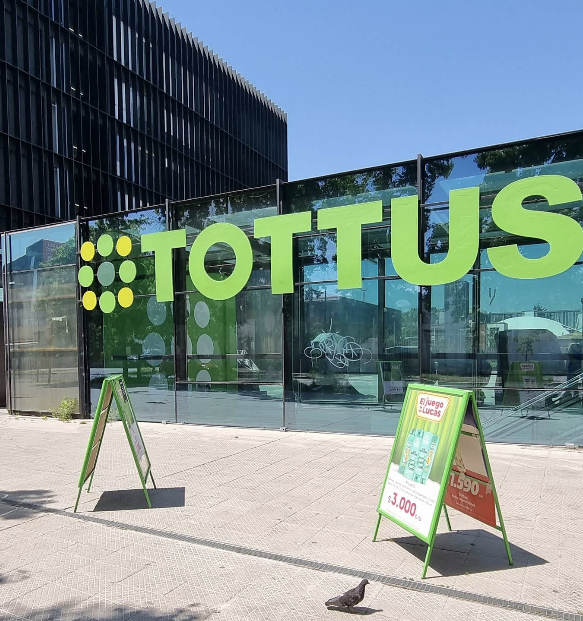
Tottus offers a slightly nicer shopping experience without straying too far from Lider-level pricing. They carry good store-brand products, reliable produce, and solid bakery items (do not sleep on their marraquetas!) We love Tottus and it is our go-to grocery store for all the non-produce essentials
Jumbo
U.S. equivalent: Whole Foods / Trader Joe’s hybrid
Jumbo is the “premium” supermarket in Chile. Expect imported goods, organic produce, gluten-free and vegan sections, specialty cheeses, and very good bakery and prepared foods. It’s more expensive, but when you want something specific or higher quality, Jumbo usually has it.
Unimarc
U.S. equivalent: Safeway
We have only shopped at Unimarc a handful of times, mostly when we travel to other cities in Chile. It has all your basics for reasonable prices.
Santa Isabel
U.S. equivalent: Albertsons
Owned by the same company as Jumbo, but smaller, cheaper, and more casual.
⭐️ Tip: Don’t forget to pack a reusable grocery bag! We own this one, but we’d be lying if we didn’t share that we would forget it, and ended up with over 5 grocery store-branded bags.
🪪 The RUT System: How It Works for Grocery Shoppers
“¿Canjeas puntos? ¿Tu RUT?”
In Chile, almost every cashier will ask for your RUT (RUN), your Chilean ID number. This is how stores track discounts, loyalty points, and promos. Without a RUT, the prices on the shelf often don’t match the prices at checkout.
If you’re living in Chile long-term, getting a RUT is essential.
If you’re visiting short-term, not all is lost:
- Many stores allow you to use 55.555.555-5 as a generic RUT
- You’ll get the lower promo prices
- You won’t accumulate points, but you’ll save money instantly
- Delivery apps (Rappi, and Uber) don’t require a Chilean RUT
Points & Rewards Programs Worth Knowing:
Chile’s supermarkets rely heavily on reward systems. If you shop regularly, these can actually save you some decent $$$.
Cencosud Points (Jumbo + Santa Isabel + Paris)
Great if you shop at Jumbo often.
Mi Club Lider (Lider / Walmart)
Simple points system linked to your RUT.
Tottus “Sabor y Ahorro”
Automatic once your RUT is added.
Points can be redeemed for groceries, household items, or even non-food purchases at affiliated stores.
⭐️ Tip: Always enter your RUT before checking out online, some promos won’t activate afterward.
📱 Online Ordering Challenges: Why Delivery Apps Are Your Best Friend
We’ve had a lot of trouble ordering directly from Chilean grocery websites. Every time we tried paying with our U.S. credit cards, like our Capital One Venture X or Chase Sapphire Preferred, the websites rejected our payments without explanation.
We tested Lider, Jumbo, and Tottus multiple times. Same result.
If you’re trying to order groceries online, delivery apps are truly your best bet.
Best Options:
1. Uber
Fast, reliable, accurate, and by far the easiest way to shop. You can track your shopper, approve or deny substitutions, and shop at almost every major supermarket.
2. Rappi
Good for groceries and restaurants. The app can be chaotic sometimes, but it usually works. Payment issues are rare compared to the grocery websites.
 Tip: If you’re visiting Chile or using a foreign card, avoid grocery websites. Use Uber or Rappi.
💰What’s Expensive in Chile (So You’re Not Shocked)
Chile is affordable in certain areas, but groceries aren’t always cheap, especially imported items. Expect high prices for:
- Most cheese (especially imported)
- Almond/oat/soy milk
- Peanut butter (really any nut butter)
- Protein bars
- Cereal
- International condiments like Cholula, Tapatio, Valentina, etc.
Make sure to pack any of your favorite Trader Joes staples (we miss it desperately) or plan ahead and ask friends and family to pack some of that balsamic glaze, and everything but the bagel seasoning when they come visit!
🌶️ Our Spicy Food Problem (And How We Solved It)
We love spicy food. LOVE. And while Chilean cuisine has many amazing flavors, it’s not a spicy-food culture. We ended up buying huge bottles, literally 1-liter jugs of Tapatío, Valentina, and Tajín, and packed them in our checked bag. No shame. If you’re craving U.S. or Mexican hot sauces, snacks, and pantry items, there’s one place that carries many of these items.
- KiosClub: They sell a wide selection of imported goods, including Costco’s Kirkland brand. Is it pricier? Absolutely. But when you’re craving m&m’s, peanut butter pretzels, or hot sauce, it’s worth it.
☕️ Where's the Good Coffee!
As avid coffee drinkers, we are here to tell you to NEVER buy coffee at the grocery store. We spent way too long drinking what can only be described as expensive, burnt water because we didn’t know any better. Then a friend changed our lives by introducing us to Outlet del Café.
Not only is the coffee actually good, but they are also focused on sustainability.
You can choose:
- The type of roast (light, medium, dark)
- The grind size (espresso, moka pot, drip, French press—like a real coffee snob)
- Whole beans, if you’re fancy like that
Is it still pricier than U.S. grocery-store coffee? Maybe? Trump tariffs, so we can’t confirm on this one.
The best part and truly a miracle is that our foreign credit card was accepted. That first sip of delicious coffee produced tears.
🥕 Ferias: The Real Chilean Grocery Hack (Don’t Skip This)
If you take one thing from this blog, let it be this: Ferias are where the real savings (and best produce) is found.
A “feria” is a local street market where vendors sell fresh fruit, vegetables, eggs, cheese, fish, and more, straight from the farmers.
Why Ferias Are Cheaper
- Produce is local and in-season
- No supermarket markups
- You buy directly from vendors
- Prices are half what you’d pay at Jumbo or Tottus.
Where & When
Ferias happen throughout Santiago, but each neighborhood has specific days and hours, usually mornings or early afternoons.
Bring Cash
At ferias, vendors do not take credit cards, and if they do, it’s rare. You’ll want:
- Chilean pesos
- Small change
- A reusable bag (we actually bought a cart; if you are staying in Chile long-term, buy one.)
- If you have a Chilean bank account, you can also pay via bank transfer.
We learned this the embarrassing way by showing up with only 5.000 pesos (five lucas), yet, we walked away with:
- Half a watermelon
- 2 kilos of strawberries
- 1 kilo of cherries
- A bunch of cilantro
For five. thousand. pesos.
Ferias will ruin grocery store prices for you, in the best possible way.
📢 Be the first to know when our Google map drops with ferias in Santiago.
